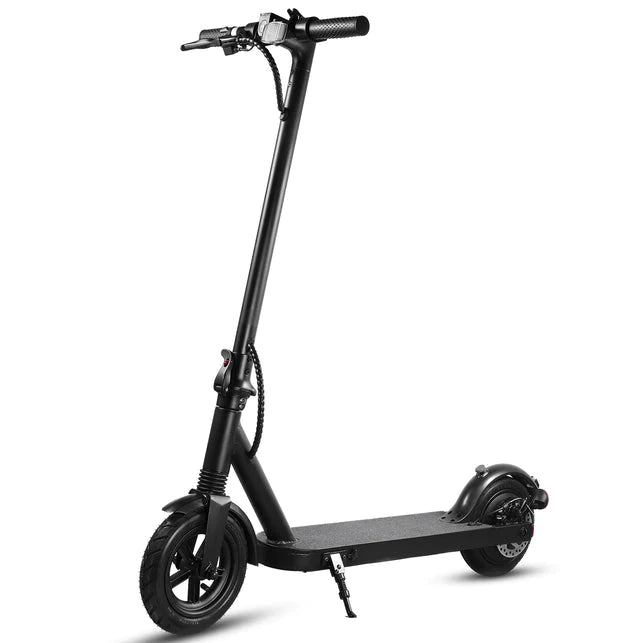
This detailed Segway Ninebot MAX G3 review looks at the scooter as a serious long-distance commuter. It covers performance, suspension, braking, technology, range, and everyday use, helping answer a practical buyer question: can the MAX G3 make rough Canadian commuting more comfortable without becoming impossible to store or carry?
The Canadian MAX G3 configuration is listed with an 850W nominal motor and up to 2,000W maximum output, a 597Wh battery, up to 45 km/h in high-speed mode, and up to 80 km of Eco range. It also includes dual hydraulic suspension, dual disc brakes, 11-inch self-sealing tubeless tires, a 130 kg payload, approximately 24.6 kg of weight, and an IPX6 scooter rating.
The video is useful for understanding how the MAX G3 combines hill power, suspension, braking, and commuter technology. Its range observations and ride impressions are test-specific, not guaranteed Canadian results. Rider weight, hills, wind, speed, tire pressure, traffic, and cold temperatures can all reduce range.
The strongest ownership advantage is the balance between comfort and maintenance. Dual hydraulic suspension can help on cracked pavement and potholes, while self-sealing tires reduce puncture-related downtime. The trade-off is weight: at about 24.6 kg, the MAX G3 is substantial for apartment stairs, transit transfers, or frequent car loading.
The TFT display, AirLock, Apple Find My, navigation, and turn signals add useful commuting features. Buyers should still check the selected region, app compatibility, charging location, and storage plan before ordering. IPX6 is a water-resistance rating, not permission to ride through floods or ignore battery-care guidance.
For Canadian riders, the 45 km/h mode may exceed public-route limits or change the vehicle classification in your province or municipality. Check local rules for roads, bike lanes, trails, helmets, insurance, and speed settings before using the high-speed mode outside private property.
Watch the full review for the MAX G3 feature and ride assessment, then set expectations around local rules, winter range, carrying weight, and your actual commute before ordering.