Proudly Canadian‑Shipped 🇨🇦 E‑Bikes & Scooters
Proudly Canadian‑Shipped 🇨🇦 E‑Bikes & Scooters

juillet 11, 2025 6 lire la lecture
Your safety always comes first. And when you are flying on your e-bike, a regular helmet just does not cut it.
We have rounded up the best electric bike helmets in Canada that match your speed and style, so you can ride smarter, safer, and with total confidence.
We did not just skim specs and call it a day. Our team spent over 10 hours researching, comparing 15+ helmet models, analyzing hundreds of real user reviews, and consulting expert safety ratings (like Virginia Tech and MIPS).
We looked at comfort, safety certifications, ventilation, value, and real-world feedback, all to make sure you get a list you can trust.
|
Helmet |
Best Used For |
Key Safety Feature |
Comfort & Fit |
Weight (Approx.) |
Price (CAD) |
|
GEM Bike Helmet with MIPS |
Daily commuting, longer rides, and trail use |
MIPS + 5-star Virginia Tech rating |
Adjustable dial, ponytail-friendly |
~316g |
$69.99 |
|
PHX Breeze 2 |
Casual cruising, city rides |
DOT certified |
Lightweight, easy on/off |
~1050g (half-face) |
$57.99–$65.99 |
Ready to dive deeper? Let us break down each helmet so you can see exactly what makes them stand out on (and off) the road.
In our experience, the GEM Bike Helmet with MIPS feels like that rare find that balances protection and comfort without emptying your wallet.
From the moment you adjust the dial fit system, you notice how secure yet lightweight it feels, with no awkward pressure points or slipping around.
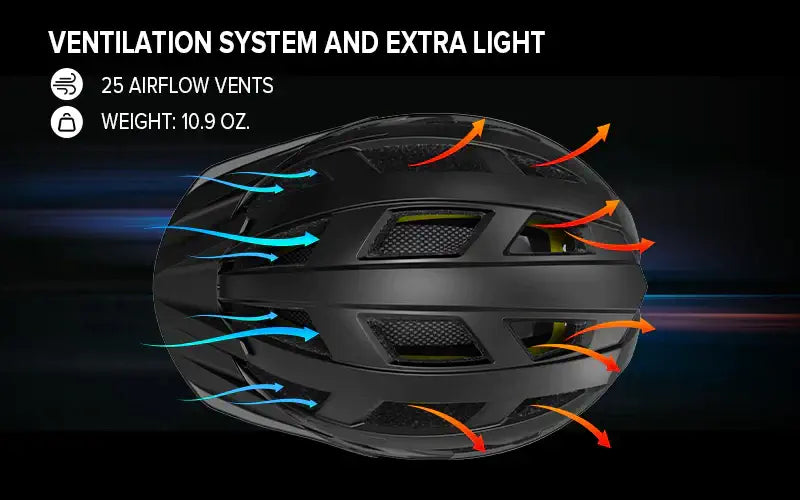
Its MIPS technology adds a reassuring layer of safety, and the ventilation is solid enough to keep you cool on longer rides.
We found it easy to wear for daily commutes and even weekend trail spins, and that ponytail-friendly design is a thoughtful bonus many riders appreciate.
Endorsed for its excellent 5-star safety rating from Virginia Tech, highlighting its strong concussion protection.
Experts love that it delivers MIPS technology at a price point much lower than most high-end helmets.
Noted for its sturdy build and solid ventilation, making it versatile for both city and light trail use.
Riders praise how lightweight and comfortable it feels, even on longer rides.
Appreciated for its adjustable fit system and removable liner that keeps it fresh.
Many love the clean design and the variety of colours, giving it a stylish edge.
View GEM MIPS Helmet on Street Rides
In our experience, the PHX Breeze 2 feels like that breezy, no-fuss choice for riders who just want to get out and enjoy the city.
From the first time you snap on the ultra-soft padded chin strap, you notice how light and open it feels, almost like wearing nothing at all.
The half-face design gives you wide visibility and great airflow, making short city commutes and relaxed neighbourhood rides genuinely enjoyable.
While it does not have advanced rotational protection like MIPS, its DOT certification still offers a solid base level of safety, especially at lower speeds.
Experts highlight its ultra-lightweight build as perfect for casual, everyday riding.
The DOT certification ensures it meets basic impact standards in Canada, even if it lacks full-face or advanced rotational protection.
Loved for its simplicity and comfort-focused design, making it easy to put on and forget.
Riders love the freedom and ventilation it offers, especially during warm days.
Many appreciate its minimalist, stylish look that does not feel bulky or heavy.
Valued for its easy on and off design and overall comfort during short, low-speed trips.
Helmet requirements for e-bike riders vary across Canada. Here is the current status by province.
| Province | Helmet Required? | Details |
| British Columbia | Yes (all ages) | Mandatory for all cyclists and e-bike riders. Fines start at $29. |
| Alberta | Yes (under 18) | Required for riders under 18. Strongly recommended for adults. |
| Saskatchewan | No provincial law | Some municipalities require helmets. Check local bylaws. |
| Manitoba | No provincial law | No requirement, but recommended by Manitoba Public Insurance. |
| Ontario | Yes (under 18) | Required for riders under 18. No law for adults on standard e-bikes. |
| Quebec | No | No helmet law for cyclists or e-bike riders of any age. |
| New Brunswick | Yes (all ages) | Mandatory for all cyclists including e-bike riders. |
| Nova Scotia | Yes (all ages) | Mandatory. Fines range from $148 to $242. |
| Prince Edward Island | Yes (all ages) | Mandatory for all cyclists. |
| Newfoundland | Yes (under 18) | Required for riders under 18. |
Not all helmets protect equally at every speed. Here is how to match your helmet to your riding style.
| Speed Range | Riding Style | Minimum Helmet Standard | Recommended Features |
| Under 25 km/h | Casual neighbourhood rides, errands | CPSC or CSA certified bicycle helmet | Ventilation, lightweight fit |
| 25 to 32 km/h | Daily commuting, bike lanes | CPSC/CSA + MIPS | MIPS rotational protection, rear light, visor |
| 32 to 45 km/h | Speed pedelecs, off-road trails | NTA-8776 or equivalent | Extended rear coverage, reinforced shell, MIPS |
| Over 45 km/h | High-speed off-road, motor-assisted | DOT or ECE 22.06 motorcycle rated | Full-face protection, chin bar, visor |
The two helmets in this guide cover the first two tiers. The GEM MIPS helmet is ideal for commuters riding at 25 to 32 km/h. The PHX Breeze 2 suits casual riders under 25 km/h.
If you ride a high-speed e-bike (over 32 km/h), consider a speed pedelec helmet with NTA-8776 certification or a DOT-rated motorcycle helmet. Standard bicycle helmets are not tested for impacts at those speeds.
Helmet certification labels can be confusing. Here is what each one means and why it matters.
| Certification | What It Covers | Speed Tested | Required in Canada? |
| CPSC (US Consumer Product Safety Commission) | Basic impact absorption for bicycle helmets | Up to ~25 km/h impact | Accepted, most common standard |
| CSA (Canadian Standards Association) | Canadian bicycle helmet standard | Similar to CPSC | Yes, the official Canadian standard |
| MIPS (Multi-directional Impact Protection System) | Rotational force reduction during angled impacts | Add-on to CPSC/CSA | Not required, but highly recommended |
| NTA-8776 (Dutch speed pedelec standard) | Higher-speed e-bike protection with extended coverage | Up to 45 km/h | Not required, but best for fast e-bikes |
| DOT (Department of Transportation) | Motorcycle-level impact protection | Highway speeds | Required for motorcycle use |
| Virginia Tech Star Rating | Independent crash-test ranking (1 to 5 stars) | Multiple impact scenarios | Not a certification, but the most trusted independent test |
Our recommendation: At minimum, choose a CPSC or CSA certified helmet. For e-bike commuting at 32 km/h, add MIPS. The GEM Bike Helmet in this guide carries both MIPS and a 5-star Virginia Tech rating, making it one of the best value picks available in Canada.
E-bike riders often travel at higher speeds, which means a regular bike helmet might not provide enough protection. Helmets with features like MIPS (as in the GEM Bike Helmet) or extended coverage are strongly recommended for better safety.
Look for helmets that meet DOT, CSA, or CPSC standards for basic impact protection. For extra safety, consider helmets with MIPS or even NTA-8776 (though not mandatory in Canada). The GEM Bike Helmet, for example, has both MIPS and a top Virginia Tech safety rating.
Very important. Good airflow helps prevent overheating, especially during longer or stop-and-go rides. Helmets like the GEM and PHX Breeze 2 are designed with multiple vents to keep riders comfortable.
Yes, as long as they meet proper safety certifications. A lightweight design (like the PHX Breeze 2) can actually improve comfort and reduce neck fatigue without sacrificing baseline safety.
They are not mandatory but can greatly improve your riding experience. Visors help with sun and debris, while integrated lights (seen in some urban helmets) improve visibility in traffic and low-light conditions.
It depends on your province. British Columbia, New Brunswick, Nova Scotia, and PEI require helmets for all ages. Ontario, Alberta, and Newfoundland require them for riders under 18. Quebec, Manitoba, and Saskatchewan have no provincial helmet law. See our province-by-province table above for full details.
After hours of deep research, hundreds of user reviews, and expert insights, one thing is clear: your helmet is more than just gear. It is your ticket to ride confidently.
Choose the helmet that matches your ride style and enjoy every kilometer knowing you are covered. If you have questions or need help picking the right fit, feel free to reach out to us anytime. We are just a chat or message away.
Ready to ride smarter and safer? Check out the helmets today and make your next e-bike adventure your best yet.
Les commentaires sont approuvés avant leur publication.